

Table of Contents
When the Multiverse collapsed in Avengers: Secret Wars, it was a big moment for fans. But many wonder how that will change things moving forward.
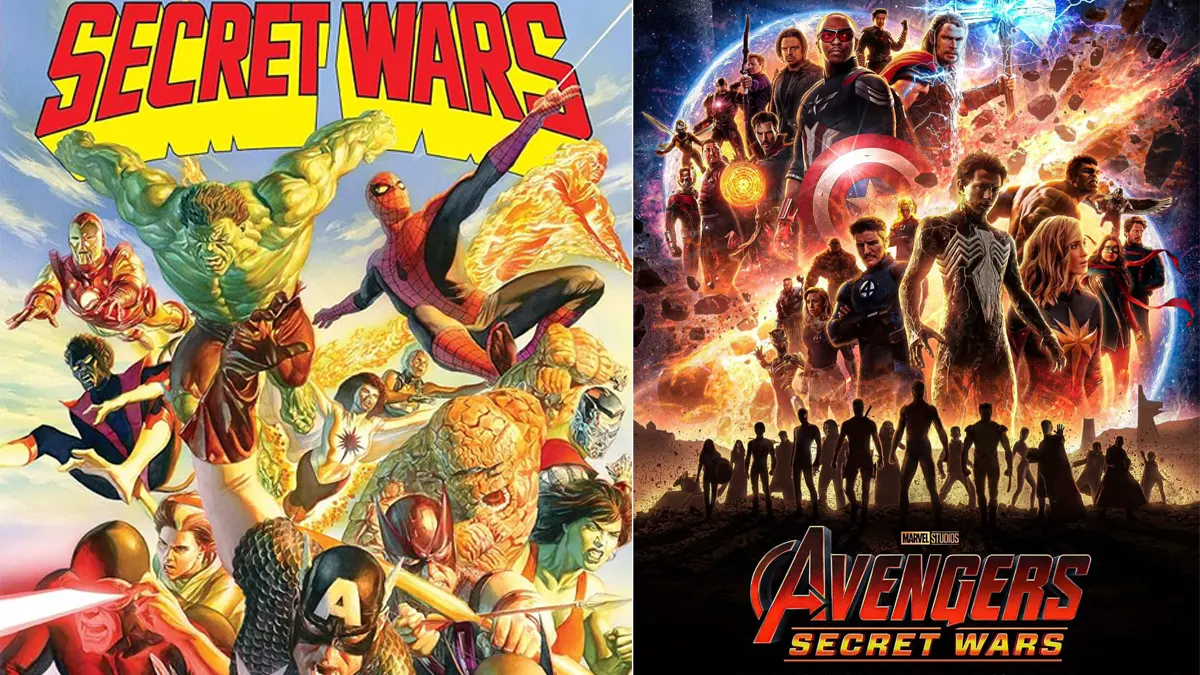
In 2015, writer Jonathan Hickman (Avengers, New Avengers) and artist Esad Ribic debuted a nine-part series called Secret Wars. It was a big event that put Marvel heroes and villains on a grand stage.
Origin
The original 1984 SECRET WARS was a monumental event that irrevocably changed Marvel Comics storytelling. It was the first major event that combined most of a publisher’s marquee heroes in one epic story. That story, which took place on a distant planet called Battleworld, would see heroes and villains team up for an all-out super-powered slobberknocker.
The story behind the SECRET WARS saga revolved around an all-powerful cosmic being known as the Beyonder, who created Battleworld and used its immense power to keep his many alternate realities in check. When all the other universes started to collide, it became a threat that needed to be stopped before it was too late.
Various heroes and villains were teleported to Battleworld, including the Avengers, the X-Men, and Spider-Man. While there was safety in numbers, allegiances shifted and heroes and villains betrayed each other. And of course, there was Doctor Doom, who was determined to use Battleworld as a means to acquire his own godlike powers.
In 2015, writer Jonathan Hickman revived the SECRET WARS saga and took it to new heights. He enlisted a slew of talented artists to bring his vision to life, and the result was a nine-issue run and healthy collection of tie-ins that were both high-concept and fun. There was also DEADPOOL’S SECRET SECRET WARS, which un-erased Deadpool from the original fracas, and SECRET WARS TOO, which was essentially a meta-anthology about Hickman writing the 2015 event.
Multiverse Collapse
The premise behind the original Secret Wars was that multiple universes (or dimensions) coexist. These parallel universes are called the Multiverse, and they are all governed by a central authority known as He Who Remains. He Who Remains is able to manipulate matter and energy at his whim, determining the outcome of all events across the Multiverse. He Who Remains also prevents divergences in the timelines, ensuring that all realities remain aligned with one another.
While this explains the existence of different realities, it doesn’t explain why all of them suddenly collapsed. In the 2015 series, this was caused by the death of Molecule Man and a series of “incursions” that result in alternate versions of heroes and villains crashing into each other. This eventually led to the Beyonders, a group of powerful cosmic beings, losing control of the Multiverse. He Who Remains then wiped the memories of every TVA personnel and forced them into a single timeline, named Battleworld.
The surviving heroes and villains from all of the destroyed alternate universes banded together to fight against Doom on Battleworld, but Doom was a calculating opportunist and quickly began choreographing ways to usurp the power of the Beyonders. This is how he became the event’s Big Bad. Robert Downey Jr. plays Doom in the MCU version of this event, and it’s a great way to establish the character as a ruthless despot who’s eager to take over all of existence.
Kang Dynasty Connection
While it’s not a big deal to fans who have been around the comics for decades, there is one aspect of Kang’s story that will be lost in the MCU version. The comics revealed that the real Kang the Conqueror was actually Nathaniel Richards, a descendant of Reed Richards from the 31st century. This Kang ruled an empire that was built on the homes of his predecessors in the Quantum Realm, and forced the original inhabitants to group together as Freedom Fighters. He was a megalomaniacal ruler who had no empathy for others, and treated his subjects as mere pawns to be used to achieve his own goals. He was also cruel to his enemies, such as Darren Cross, whom he killed after he switched sides and became worthless to him.
In his eponymous miniseries, Kang kidnaps the Avengers in an attempt to prove his power. After he subdues the heroes, he reveals his feelings for Ravonna, the princess of one of his subject kingdoms. When she rejects his advances, he orders her executed. However, she saves her life by leaping in front of a blast meant for Kang and is mortally wounded.
This Kang the Conqueror had a neuro-kinetic suit of armor that allowed him to use his powers in the Quantum Realm. It also enhanced his strength to superhuman levels. He could flick away Ant-Man and Wasp’s combo attack with ease, and he created the Multiversal Engine Core to allow him to travel through space and time within the Multiverse.
Rumored Heroes/Villains
The first Secret Wars was an event that brought together most of Marvel?s heroes and villains for a bare-knuckle fight on an alien planet called Battleworld. It also introduced a whole lot of new characters to the Multiverse, and rewrote much of the company?s history.
The story began when a group of omnipotent beings known as the Beyonders wanted to destroy the Multiverse by placing Molecule Man bombs in all of its universes. Reed Richards saved some of the heroes and villains from Earth-616 and the Ultimate Comics universe in a liferaft, and sent them to Battleworld, where they found themselves in a world controlled by Doctor Doom.
When the sequel came around in 2015, the Beyonder returned and used a similar premise to send heroes and villains from Earth-616 to Battleworld once again. It also revealed his backstory, that he was part of an entire species of omnipotent beings that wanted to take over all realities in the Multiverse.
The rumor is that this time around, some of the surviving hero and villain characters will be reintroduced into the MCU?s future phases, and some of them will be characters that never previously appeared in a Marvel movie. This is a risky move, as it could detract from the overall story that has been built. However, if the reintroduced heroes and villains have a purpose and are used sparingly, it could add a freshness to the movies that has been missing in recent years.