

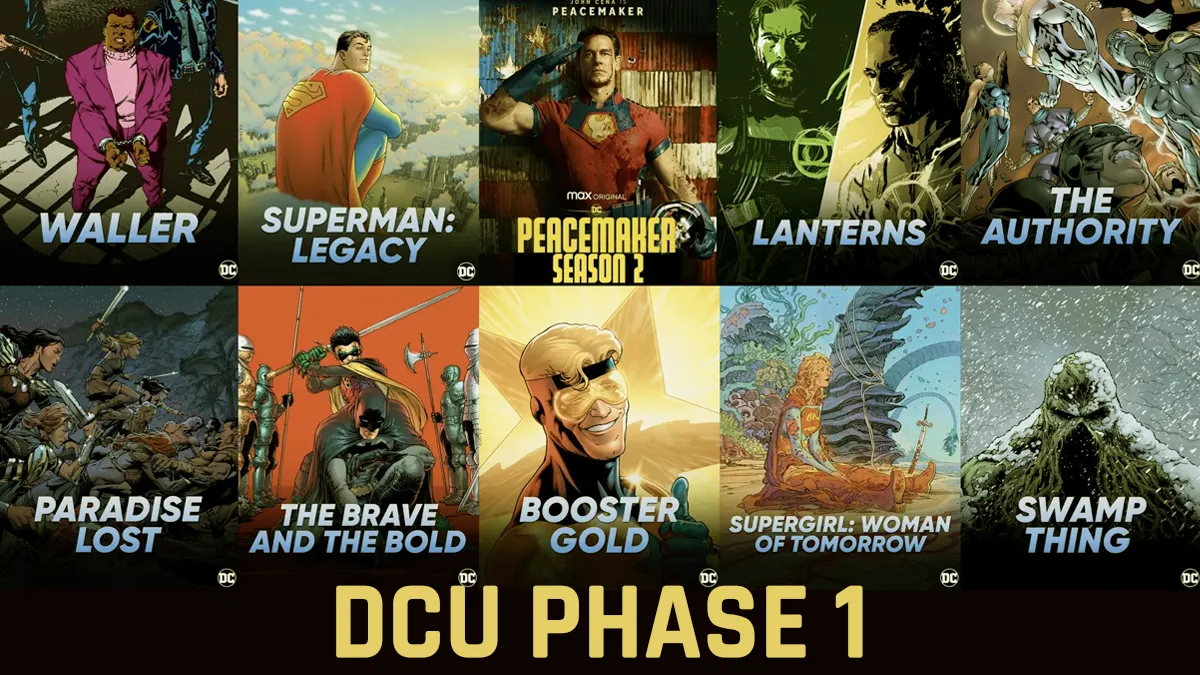
In the months following the unceremonious collapse of the DCEU, directors James Gunn and Peter Safran kept promising a new chapter for the franchise. And while several projects have slipped away from the schedule, they’re moving forward with the chapter’s first plan, Gods and Monsters.
Creature Commandos, Peacemaker Season 2, and Joker will all continue on television in this new canon. Here’s how it all connects to the future Justice League films.
Superman: Legacy
With this movie, DC Studios co-head James Gunn established his roadmap for the rebooted universe. His plan introduces key heroes, builds team dynamics, and sets up villains for crossover events. This is a welcome change from the ’80s incarnation of the League, which focused on oversaturation and superhero fatigue rather than carefully paced growth.
As the movie’s name implies, it lays the foundation for Superman’s future adventures. It also makes clear that the Man of Steel needs a team. In fact, this film deliberately dispays his weaknesses and need for help. The Justice Gang, a squad of heroes including Guy Gardner Green Lantern, Mister Terrific, and Hawkgirl, have their moments to shine in this flick. In addition, Lois Lane and Jimmy Olsen play significant roles in this Man of Steel’s world.
While it’s not obvious, this movie also implies that Superman may interact with The Authority. @MrRadastic notes that the film echoes the Kingdom Come storyline from the comics, which saw the Big Red One retire due to apathy but return when a global threat beckoned him back into action. The Authority could be the legacy heroes of this timeline, or they could be a new group that takes on the task of protecting Earth.
The film also sets up Superman’s eventual confrontation with Lex Luthor. Joaquin Phoenix is perfect as the ruthless crime lord, and his performance could easily earn him an Oscar nomination.
The Authority
A gritty and brutal superhero team, The Authority takes a different approach to the genre than many of its peers. They’re not looking to save the world, they’re trying to make it worth living in. That makes them a perfect fit for the dark and morally complicated superhero trend of recent years (as seen in shows like The Boys).
The team was created by writer Warren Ellis, with art by Bryan Hitch. They first appeared in 1999’s Stormwatch, a series that was part of the WildStorm imprint at DC and followed a black-ops team funded by the United Nations. After the series ran out of steam, most of the heroes were killed off, but the remaining members went on to form The Authority when that franchise was bought by DC in 1999.
According to one fan theory, The Authority will serve as the DCU’s very first superhero team in James Gunn’s Chapter 1 roadmap. That would set the tone for the rest of the movies, introducing key heroes and building team dynamics before moving on to bigger threats.
The storyline of The Authority is set in a post-apocalyptic world where the majority of super-heroes have either disbanded or gone into hiding. A despot from a small Asian island begins attacking cities with an army of super-powered soldiers, forcing the team to come out of hiding and defend them.
The Brave and the Bold
Unlike the 1966 series and Joel Schumacher films, The Brave and the Bold will feature a version of Batman that is closer to his comic book self. This is important because it creates an opportunity for a more complicated and refined story that will allow audiences to see the nuances of Gotham City that have not been seen before on film.
While the show started out with a strong focus on anthology stories, it eventually started to build team dynamics and set up villains for crossover events. The most notable example of this was the creation of the Justice League of America in issue #28. This event brought together Superman, Batman, Green Lantern, Martian Manhunter, and Aquaman to stop an alien starfish that was attacking Earth.
The JLA did not stay on the show for long, however, and the team-ups moved to an ongoing series that featured different heroes each month. This was a new direction for the show and it was later adapted into a DC animated television series that featured voice actors like Deidrich Bader.
While there are no specific projects that will bring the live-action DCU characters into the animated universe, there have been whispers and early movements toward creating an Untitled Teen Titans movie penned by Supergirl writer Ana Nogueira. This could finally introduce fan-favorite characters like Nightwing, Raven, and Beast Boy to a larger audience.
Supergirl: Woman of Tomorrow
James Gunn, who has a history of reviving underperforming franchises (Guardians of the Galaxy), was brought on to take charge of DC Studios alongside Peter Safran. His roadmap outlines an ambitious slate of films and TV shows that will combine into one storytelling continuity, establishing the most important heroes and villains across multiple platforms. While projects like Joaquin Phoenix’s Joker and the Penguin TV series don’t fall under Gunn’s purview, his chapter one roadmap establishes key heroes in the DC Universe and sets up villains for crossover events.
The next film in the chapter one timeline is Supergirl, directed by Craig Gillespie and written by Bilquis Evely. Based on Tom King’s acclaimed comic run, this film will follow Kara Zor-El as she hunts down the man who killed her father. The film is expected to highlight the contrast between Supergirl’s Earth-raised optimism and her Kryptonian heritage. Moreover, it will likely introduce the Engineer, a major character from the comics who has a dark side that could potentially set up the team-up between Supergirl and Lex Luthor in the future.
Supergirl is set to release in 2026, more than a year after the first Superman film. While this may seem a bit far off, it is a great placement for the film to create momentum toward the first Justice League team-up. It will also provide fans with more clues regarding the fate of Kal-El and his parents on Krypton.